NASA data · real observations · guided inquiry

Exoplanet Explorer

Exoplanet Explorer uses the NASA Exoplanet Archive and mission catalogs to turn authentic telescope data into accessible visualizations, stories, and challenges.

Confirmed exoplanets

6,372

TESS candidates

8,100+

Not all confirmed

Years of discoveries

30+

Planet Playground Detection Lab Habitable Zone

The science behind the search

Find patterns. Ask better questions.

Turn NASA catalog measurements and telescope signals into questions you can investigate.

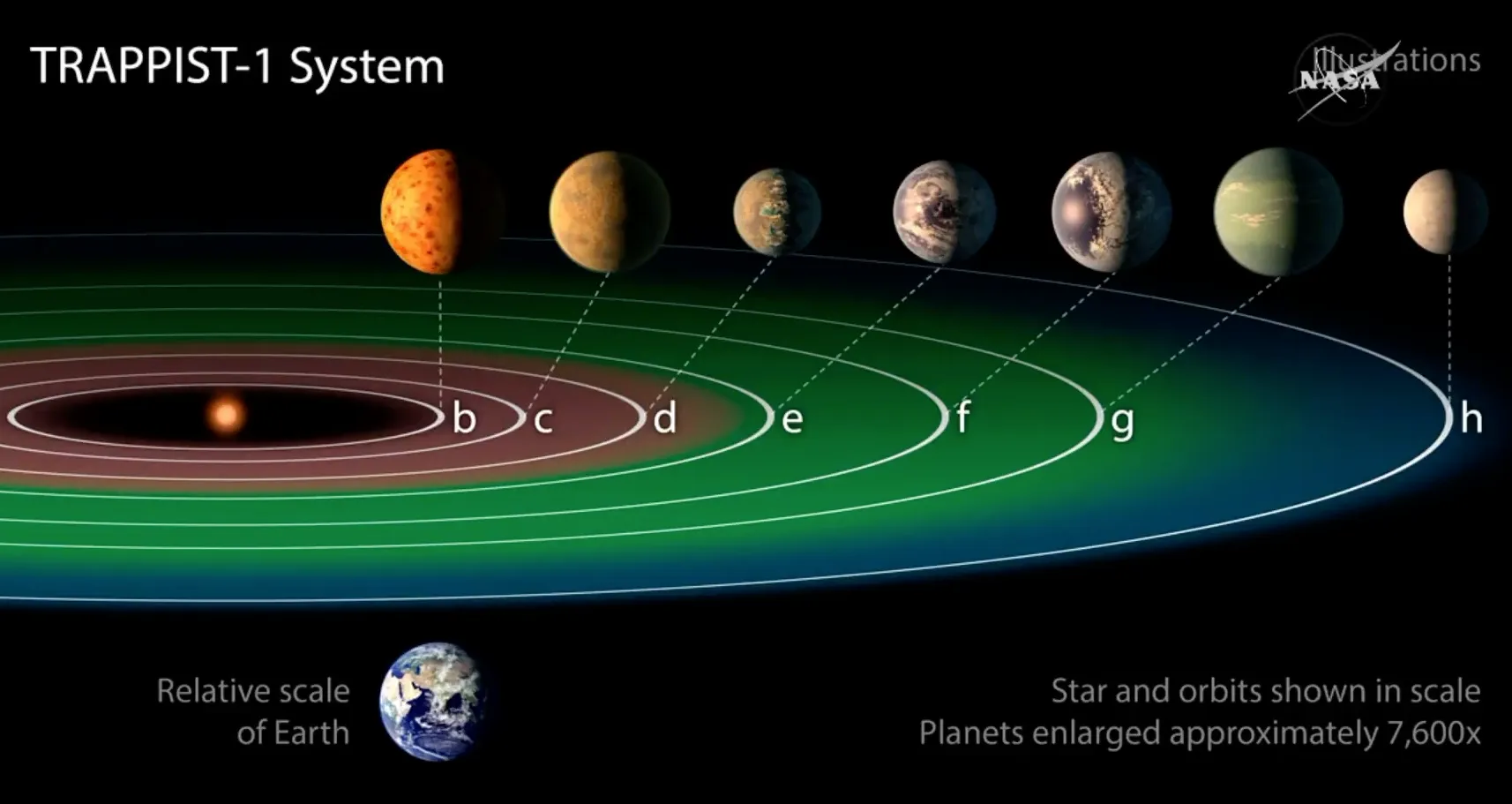
Artist's concept of the TRAPPIST-1 planetary system

01 / Explore the worlds

What are exoplanets?

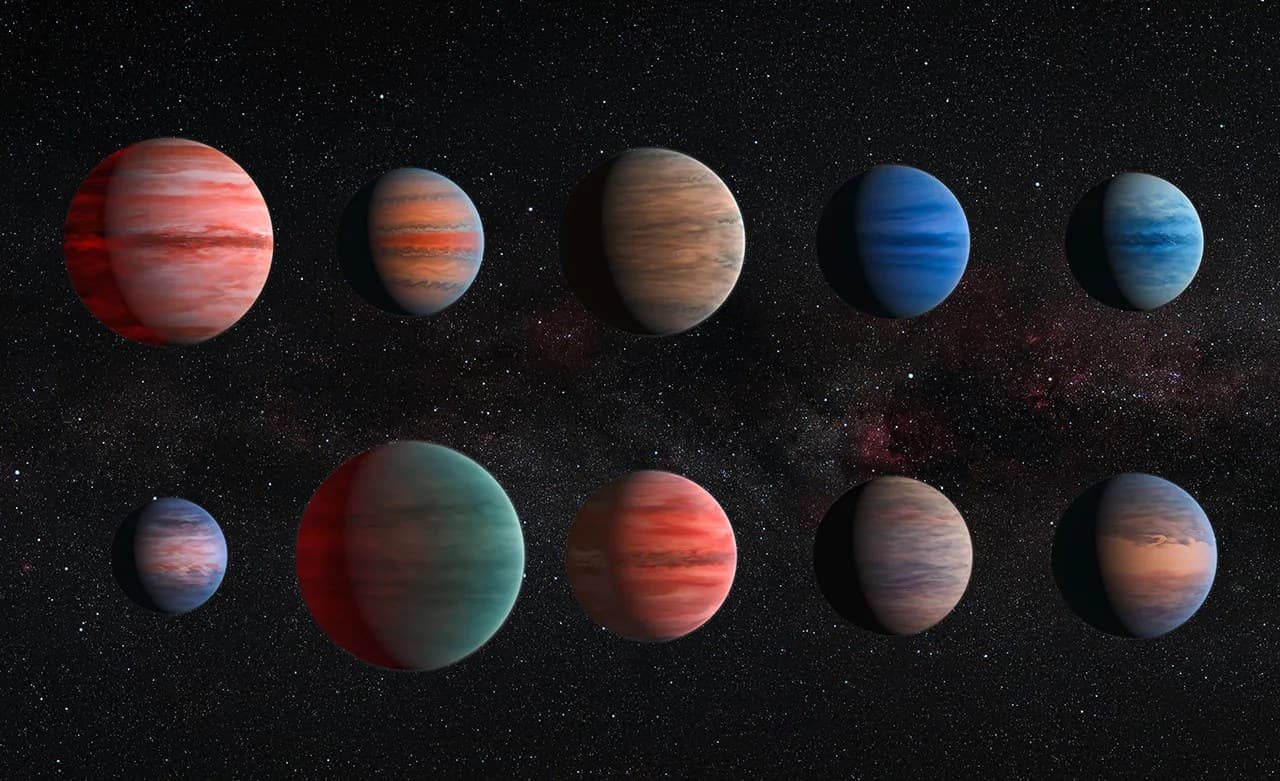
Exoplanets orbit other stars, or in rare cases drift through space on their own. They range from small rocky worlds to gas giants larger than Jupiter. Some orbit in just a few days; others take far longer.

  • Thousands of exoplanets have been confirmed so far.
  • Many live in multi-planet systems, like our own.
  • Some orbit two stars; others wander as rogue planets.
Learn more on NASA ↗
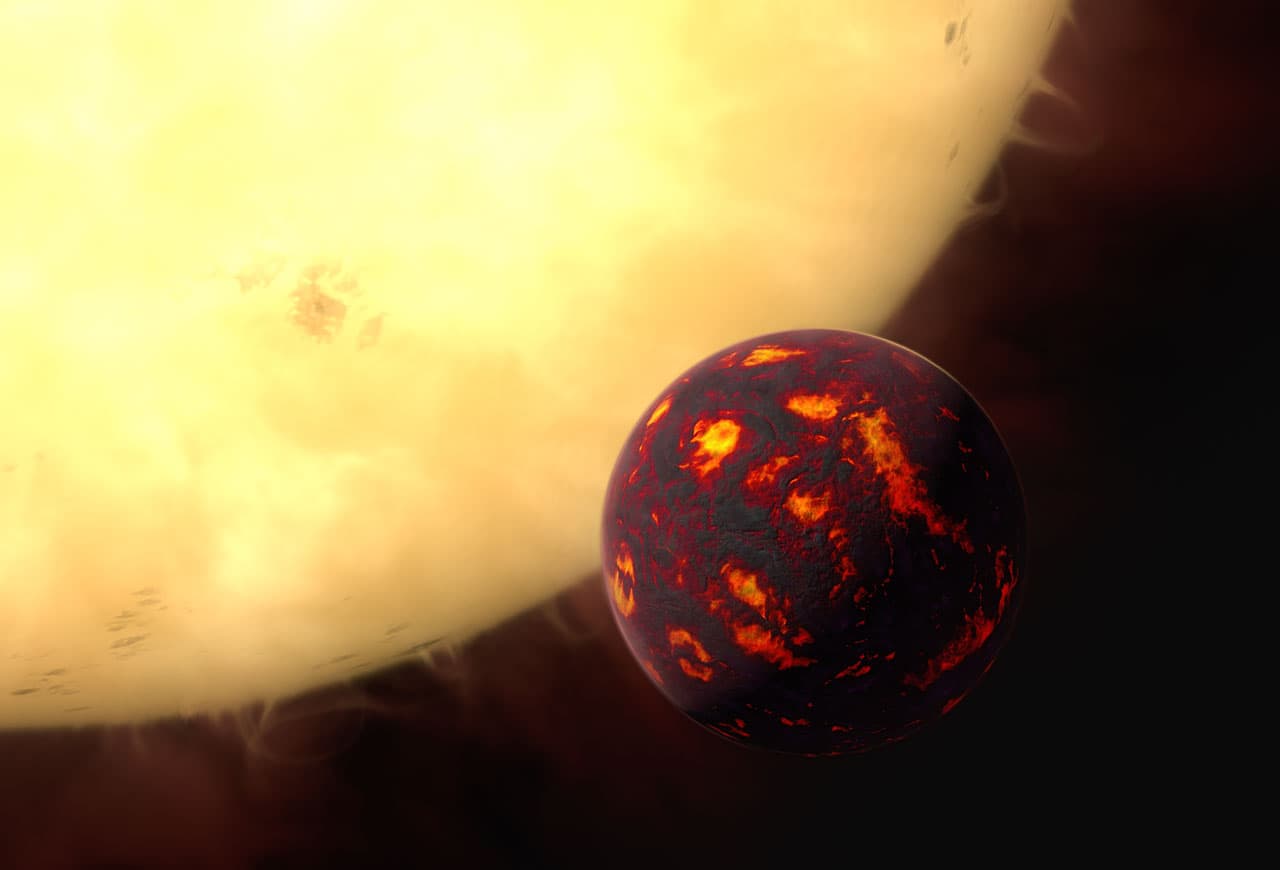
Artist's concept of the super-Earth 55 Cancri e

02 / Interpret the evidence

Why study them?

Exoplanets show that our Solar System is only one way planets can form and arrange themselves. We have found lava worlds such as 55 Cancri e and compact systems with several Earth-sized planets, such as TRAPPIST-1.

  • Planets appear to outnumber stars in our galaxy.
  • Some orbits take hours; others take centuries.
  • Some rocky planets receive roughly Earth-like levels of starlight, though that alone does not establish habitability.
Explore the big questions ↗

A guide to the catalog

Types of exoplanets

Astronomers group exoplanets by size, temperature, and how they compare to planets we know. The Playground uses a simple classroom classifier: radius sets the main size family, while very hot or close-in planets are flagged as hot Neptune-like or hot Jupiter-like worlds.

Sub-Earths

< 0.8 Earth radii

Smaller than Earth. They are difficult to detect unless they orbit close to their stars, so the catalog contains fewer of them.

Earth-size planets

0.8-1.25 Earth radii

Roughly Earth-sized worlds. Size makes them interesting, but it does not prove they are rocky, wet, or habitable.

Super-Earths

1.25-2 Earth radii

Larger than Earth but smaller than Neptune. Some may be rocky; others may have deep oceans or thick gas envelopes.

Mini-Neptunes

2-3.9 Earth radii

Bigger than super-Earths but smaller than Neptune. Many probably have thick atmospheres, and we do not have a close example in our Solar System.

Hot Neptunes

3.9-8 Earth radii, hot or close-in

Neptune-sized planets that orbit close to their stars or receive intense starlight. Their atmospheres can be strongly heated or stripped away.

Neptune-like planets

3.9-8 Earth radii

Ice-giant-scale planets broadly similar in size to Uranus or Neptune, often with deep atmospheres and no solid surface like Earth.

Gas giants

>= 8 Earth radii

Large Jupiter- or Saturn-scale planets dominated by gas. They are easier to detect than small rocky planets because of their size and mass.

Hot Jupiters

>= 8 Earth radii, hot or close-in

Gas giants like Jupiter that orbit extremely close to their stars. They were among the first major surprises in exoplanet science.

Learn more about planet types on NASA ↗

Reading the signals

How do we discover exoplanets?

Exoplanets are small and faint compared to their stars, so astronomers often detect them indirectly through changes in starlight or stellar motion.

Transit method

A planet passes in front of its star and blocks a tiny fraction of the starlight. Missions like Kepler and TESS watch for these repeating dips in brightness.

Example: Kepler-186 f

Radial velocity

A planet's gravity makes its star wobble. By measuring tiny shifts in the star's spectrum, astronomers can infer the planet's presence and mass.

Example: 51 Pegasi b

Direct imaging

Powerful telescopes block the star's light and directly capture the faint glow of giant planets, as the James Webb Space Telescope has begun to do.

Example: HR 8799 c

Gravitational microlensing

A foreground star and its planets act like a gravitational lens, briefly brightening a more distant star. These rare flashes can reveal planets thousands of light-years away.

Example: OGLE-2005-BLG-390L b

Astrometry

Astronomers measure a star's tiny side-to-side motion on the sky. This can reveal wider-orbit planets around nearby stars.

Example: Gaia astrometric planets

Pulsar timing

Tiny changes in a pulsar's clock-like radio pulses can reveal orbiting planets. This method found some of the first confirmed exoplanets.

Example: PSR B1257+12 planets

Acknowledgements & data credits

Data and learning resources

Image credits

This is an independent educational project, not an official NASA or ESA product.